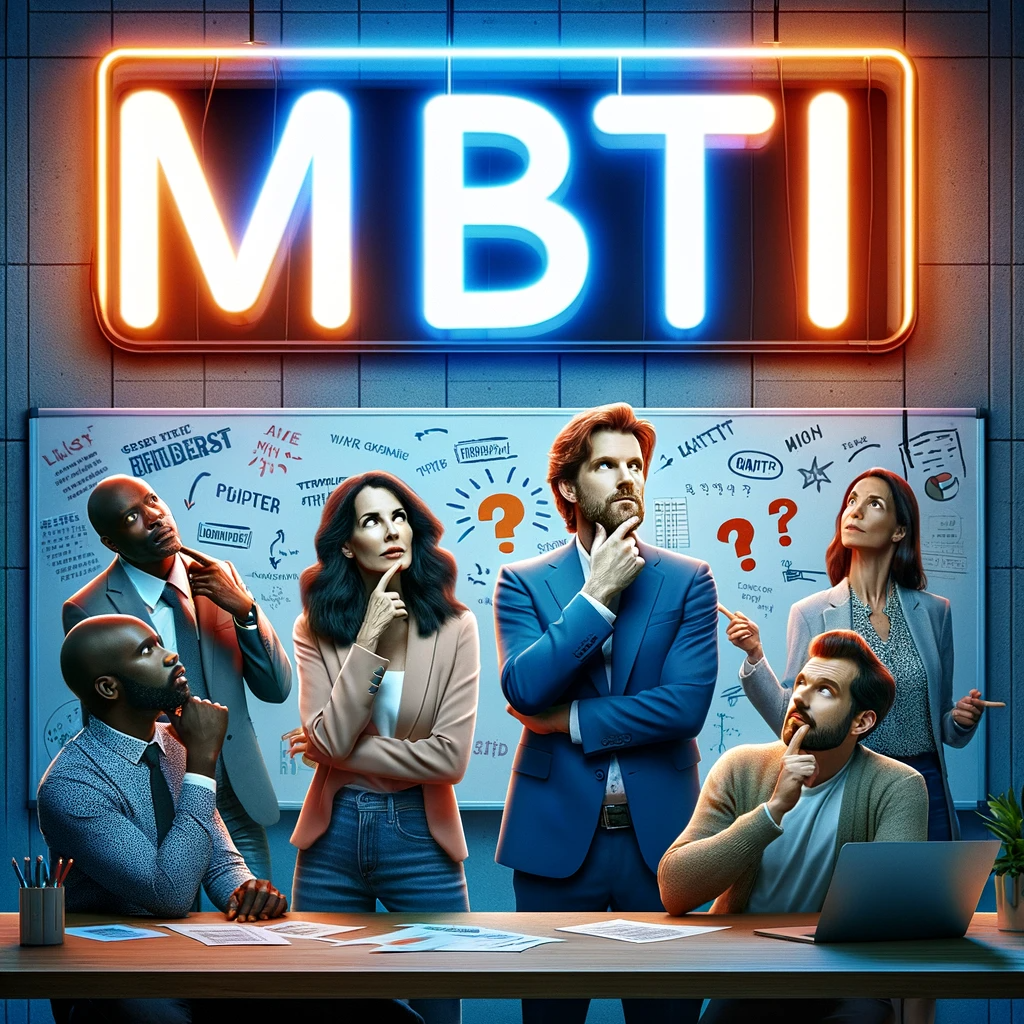
Another appearance on Morning Wave in Busan! Why is the MBTI so popular?

Off another appearance on the Korean English-radio show Morning Wave in Busan, I had the opportunity to delve into the fascinating world of the Myers-Briggs Type Indicator (MBTI)

The Myers-Briggs Type Indicator (MBTI), much like a character in a movie, offers a simple and relatable way to categorize personalities into 16 types. Its widespread appeal lies in its ability to provide a framework for understanding ourselves and others. However, this popularity is shadowed by significant criticisms about its scientific validity, particularly its oversimplified binary approach to the complex spectrum of human personality.

Despite these concerns, the MBTI has found a place in various societal contexts, including job interviews in countries like Korea. While it can be a useful tool for self-awareness and understanding interpersonal dynamics, it’s crucial to use it cautiously, especially in professional settings. The MBTI, like a captivating movie, should be enjoyed for its insights while being mindful of its limitations in accurately representing the full scope of human behavior.

Here’s the video interview (it’s linked to the right timecode):

Leave a Comment

Filed under My Updates, Personality Assessment, SciComm

Interviewed on Morning Wave in Busan! Con artist tactics and biases

A vivid scene in an urban environment where a con artist, a confident White male in his 40s, dressed in a flamboyant suit, is performing a three-card monte on a portable table. He has a slicked-back hairstyle and a sly grin, making extravagant gestures to entice the crowd. A Black female assistant, dressed in a colorful dress and with a mischievous look, is subtly pointing at one of the cards, suggesting a rigged game. The surrounding crowd, including a young Middle-Eastern male and an elderly South Asian female, are looking on with a mix of excitement and suspicion, with some individuals appearing to be in the midst of betting. The backdrop is a graffiti-covered wall, signaling a less affluent area of the city, with the bustle of city life evident in the blurred motion of people walking by in the background.

Who’s fooling who?

Just off a 10-minute expert segment on Morning Wave in Busan, I dove into the world of con artists and their psychological tactics. These modern-day illusionists blend a mix of confidence, social skills, and an air of authority to build trust and credibility. They skillfully exploit cognitive biases to connect with their targets, often using the Barnum Effect to make us feel understood on a personal level.

Gaslighting and conning, while different in approach—one destabilizes, the other deceives—both play on our vulnerabilities. Our emotional needs and life transitions can make us prime targets for their schemes. Yet, with awareness and skepticism, we can fend off these deceptive advances.

Here’s the video interview:

Knowledge is our best defense. Stay sharp, stay skeptical, and keep questioning.

Leave a Comment

Filed under My Updates, SciComm

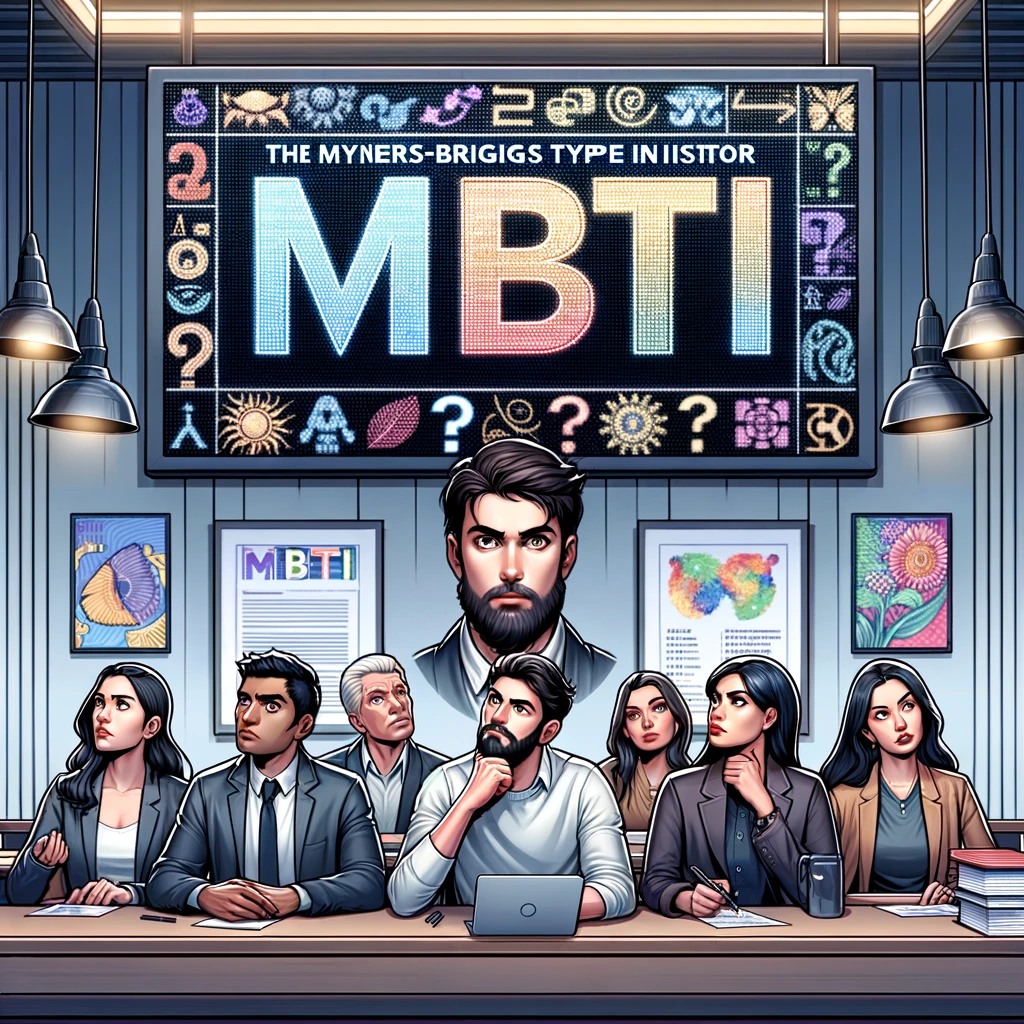
Colin McEnroe Show Appearance: MBTI for Real?

Back in August 2023, I appeared on the Colin McEnroe show, an NPR show through their member station affiliate at Connecticut Public Radio. I had the pleasure of delving into the intricate world of personality assessments with host Colin McEnroe.

MBTI, a widely recognized and frequently used personality assessment tool, often comes under scrutiny in the academic sphere. Alongside my writing partner, Randy Stein, we tackled the ambitious task of measuring the validity of MBTI using three distinct metrics. The goal was to dissect the theory that forms the backbone of the assessment — an essential step to ensuring that the instrument’s measurements are transparent, assumption-based, and prediction-ready.

During the conversation, we also touched upon the reasons why MBTI remains popular despite academic criticism. It’s an interesting phenomenon that may tie into the self-validation and self-esteem boost that people experience when their personality is seemingly encapsulated in a neat, four-letter type.

As the conversation wrapped up, I reflected on the human tendency to find comfort in categorization — whether through MBTI types, Hogwarts houses, or even our favorite ‘Sex and the City’ character archetypes.

Here’s the link the episode: https://www.ctpublic.org/show/the-colin-mcenroe-show/2023-08-03/are-you-an-enfp-an-istj-a-look-at-the-history-validity-and-potential-of-myers-briggs

Leave a Comment

Filed under My Updates, Personality Assessment, SciComm

New Course Release: Understanding Cognitive Biases on Wondrium

I am pleased to share the release of my new course, “Understanding Cognitive Biases,” now available on Wondrium. This course explores the fascinating world of cognitive biases and their impact on our daily decisions and interactions, illustrated with practical examples from our everyday lives and the cinematic world.

Whether you’re delving into psychology or just curious about the workings of the mind, this course offers a thoughtful exploration into a core aspect of cognitive psychology.

Explore the course here.

Leave a Comment

Filed under My Updates

Conservatives value personal stories more than liberals do when evaluating scientific evidence

Randy Stein, California State Polytechnic University, Pomona; Alexander Swan, Eureka College, and Michelle Sarraf, California State Polytechnic University, Pomona

The Research Brief is a short take about interesting academic work.

The big idea

Conservatives tend to see expert evidence and personal experience as more equally legitimate than liberals, who put a lot more weight on the scientific perspective, according to our new study published in the journal Political Psychology.

Our findings add nuance to a common claim that conservatives want to hear “both sides” of arguments, even for settled science that’s not really up for debate.

We asked 913 American adults to read an excerpt from an article debunking a common misconception, such as the existence of “lucky streaks” in games of chance. The article quoted a scientist explaining why people hold the misconception – for instance, people tend to see patterns in random data. The article also included a dissenting voice that drew from personal experience – such as someone claiming to have seen lucky streaks firsthand.

Our participants read one of two versions of the article. One version presented the dissenting voice as a quote from someone with relevant professional experience but no scientific expertise, such as a casino manager. In the other version, the dissenting opinion was a comment at the bottom from a random previous participant in our study who also disagreed with the scientist but had no clearly relevant expertise – analogous to a random poster in the comment section of an online article.

Though both liberals and conservatives tended to see the researcher as more legitimate overall, conservatives see less of a difference in legitimacy between the expert and the dissenter.

Why it matters

Looking at both our studies together, while about three-quarters of liberals rated the researcher as more legitimate, just over half of conservatives did. Additionally, about two-thirds of those who favored the anecdotal voice were conservative. Our data also showed that conservatives’ tendency to trust their intuitions accounted for the ideological split.

Other studies of a scientific ideological divide have focused on politicized issues like climate change, where conservatives, who are more likely to oppose regulation, may believe they have something to lose if policies to curb climate change are implemented. By using apolitical topics in our studies, we’ve shown that science denial isn’t just a matter of self-interest.

In stripping away political interest, we have revealed something more basic about how conservatives and liberals differ in the ways they interact with evidence. Conservatives are more likely to see intuitive, direct experience as legitimate. Scientific evidence, then, may become just another viewpoint.

Though we conducted these studies in 2018 before the pandemic, they help explain some of the ideological reactions to it in the U.S.

Among conservatives especially, the idea that the pandemic itself is not a major threat can hold as long as there’s personal evidence on offer that supports that view. President Donald Trump’s recovery from COVID-19 and his assertion based on his own experience that the disease is not so bad would have bolstered this belief. Recommendations from researchers to wear masks can remain mere suggestions so long as the court of public opinion is still undecided.

What other research is being done

Social scientists are already documenting ideological reactions to the pandemic that fit our findings. For example, many conservatives see the coronavirus as less of a threat and are more susceptible to misinformation. They also tend to see preventive efforts as less effective. Our studies suggest these views will continue to proliferate as long as anecdotal experience conflicts with scientific expertise.

What’s next

An individual’s understanding of scientific evidence depends on more than just his or her political ideology. Basic science literacy also plays a role.

The pandemic has forced people to confront how hard it is to understand the uncertainty inherent in many scientific estimates. Even liberals who are initially more sympathetic to science information might find their confidence in public health messages tested if these messages waver and evolve.

As such, we expect future research will focus on how health officials can most effectively communicate scientific uncertainty to the public.

Randy Stein, Assistant Professor of Marketing, California State Polytechnic University, Pomona; Alexander Swan, Assistant Professor of Psychology, Eureka College, and Michelle Sarraf, Master’s Student in Economics, California State Polytechnic University, Pomona

This article is republished from The Conversation under a Creative Commons license. Read the original article.

Leave a Comment

Filed under My Updates, SciComm